
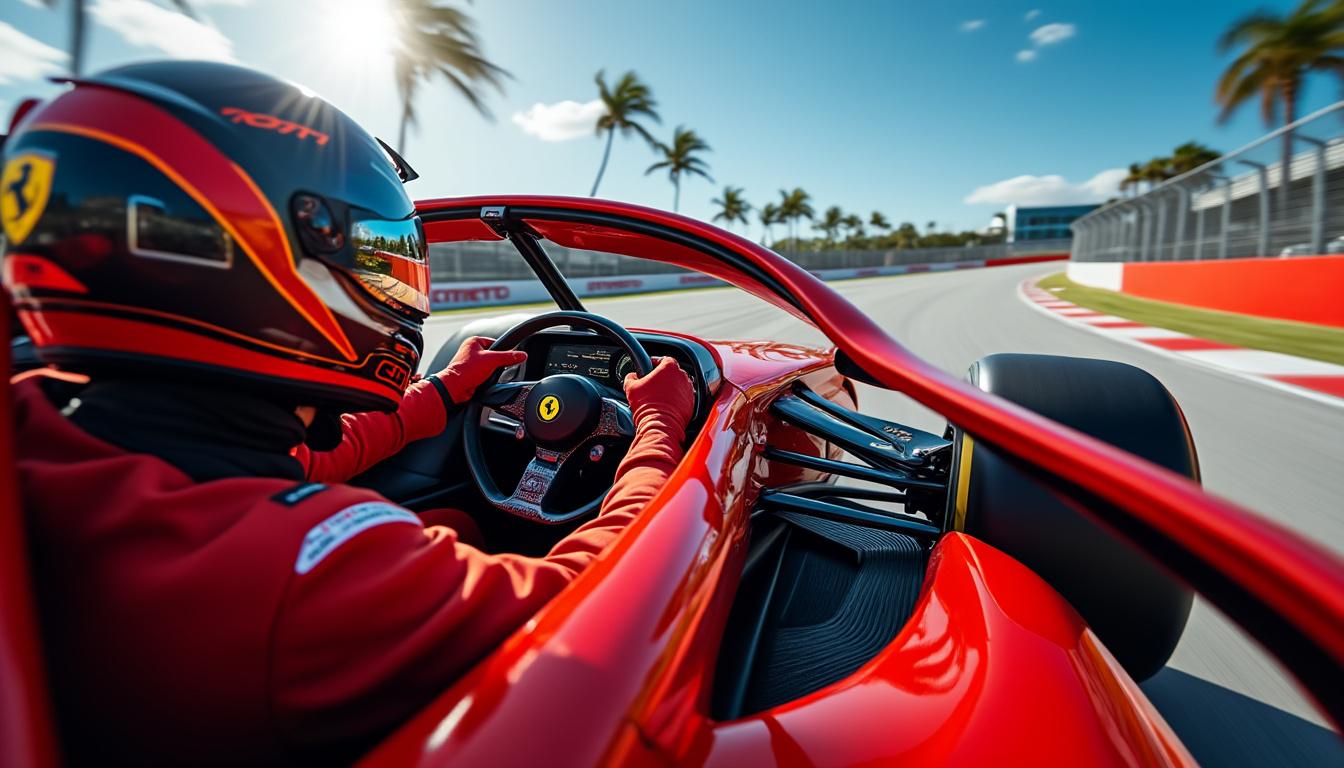
Boost your betting experience and get up to $200 bonus right now!
As the adrenaline fades from the 2025 Miami Grand Prix, the motorsport world turns its gaze to the upcoming Miami 2026 event with bated breath. Ferrari’s 2025 campaign has been a rollercoaster, filled with flashes of brilliance and moments that brutally exposed vulnerabilities in their car and strategy. The fierce battles on the Miami track this year revealed a team struggling to capitalize on opportunities and battling setbacks beyond the driver’s control. Now, the big question echoes through the paddocks and fan forums alike: does Ferrari’s uneven performance in 2025 signal a rebuilding foundation for 2026 success, or is it a warning sign of deeper troubles ahead? With Formula 1 evolving rapidly, every tweak and split-second decision carries monumental weight, especially as teams craft their racing strategy for future campaigns. McLaren’s dominance in Miami, the relentless battles involving Max Verstappen, and the fierce midfield scrap all contextualize where Ferrari stands in the current F1 hierarchy. Understanding these dynamics in detail is imperative to grasp the implications for Ferrari’s future prospects.
In the fast-paced theatre of Formula 1, Miami 2025 served as a revealing chapter. The Grand Prix showed how nuanced the sport has become, emphasizing tactical mastery, tire management, and adaptive car performance. For Team Ferrari, 2025 was a test of resilience and innovation—a season where critical choices made on and off the track influenced their foothold in the championship. The telemetry data extracted from Lewis Hamilton’s stint exposed inherent faults like setup inconsistencies and suboptimal tire strategies, painting a vivid technical picture that teams rarely get to see so transparently. Looking forward, these insights are invaluable. They could guide Ferrari to optimize mechanical upgrades, refine their race-day decisions, and confront the fiercely competitive environment that defines modern car racing. As the narrative gears towards Miami 2026, fans and analysts alike are eager to see whether Ferrari transforms these lessons into a powerful comeback or if their 2025 struggles forecast another challenging season ahead.
Ferrari 2025: A Season Marred by Strategic Missteps and Mechanical Woes in F1 Performance
Ferrari’s 2025 Miami Grand Prix performance starkly revealed the depth of challenges currently plaguing the iconic team. Unlike the high-octane battles that thrilled spectators, Ferrari’s drivers Charles Leclerc and Lewis Hamilton finished in seventh and eighth positions respectively, lagging by more than a minute behind the race winner Oscar Piastri, who dominated with McLaren. This grim reality sparked intense debate around whether Ferrari’s technical and strategic framework is robust enough for the upcoming Miami 2026 race and beyond.
Telemetry analysis from Hamilton’s race served as a forensic dissection of the Ferrari SF-25’s shortcomings. The data illuminated critical areas where the car struggled — particularly an unstable rear end that compromised traction and corner exit speeds. This instability manifested in significant time loss in braking zones and fast corners, especially in turns that demand precision and car balance. For context:
- Leclerc lost approximately 0.4 seconds compared to Verstappen just in the initial sector — a massive gap in this sport.
- The second sector saw exacerbated oversteer issues from turns 11 to 16, with overheating tires further worsening grip levels.
- The SF-25’s sensitivity to setup parameters meant the team was stuck between balancing speed and stability — a delicate tuning challenge that often backfired.
These performance flaws were compounded by questionable race strategies that cost Ferrari invaluable track position. Despite a virtual safety car phase offering a potential strategic advantage via low-time pit stops, Ferrari’s management hesitated, failing to capitalize fully. A crucial delay in swapping driver positions between Hamilton and Leclerc disrupted their pace and ability to pursue faster cars ahead.
Consider the impact this could have had without strategic hesitancy:
- Swapping Hamilton onto medium tires earlier might have given him a genuine shot at catching Kimi Räikkönen.
- Better tire management coordination could have improved track position recovery and reduced tire degradation.
- Sharper responses to in-race events might have minimized the gap to competitors like Williams and McLaren, who outperformed Ferrari on this track.
In the grand scale, these missteps are a microcosm of Ferrari’s current struggle to harmonize the car’s technical demands with the demands of modern F1 race strategy. Miami 2025 wasn’t just a bad weekend; it was a glaring spotlight on what Ferrari must overhaul if they want to reclaim their position near the sharp end.
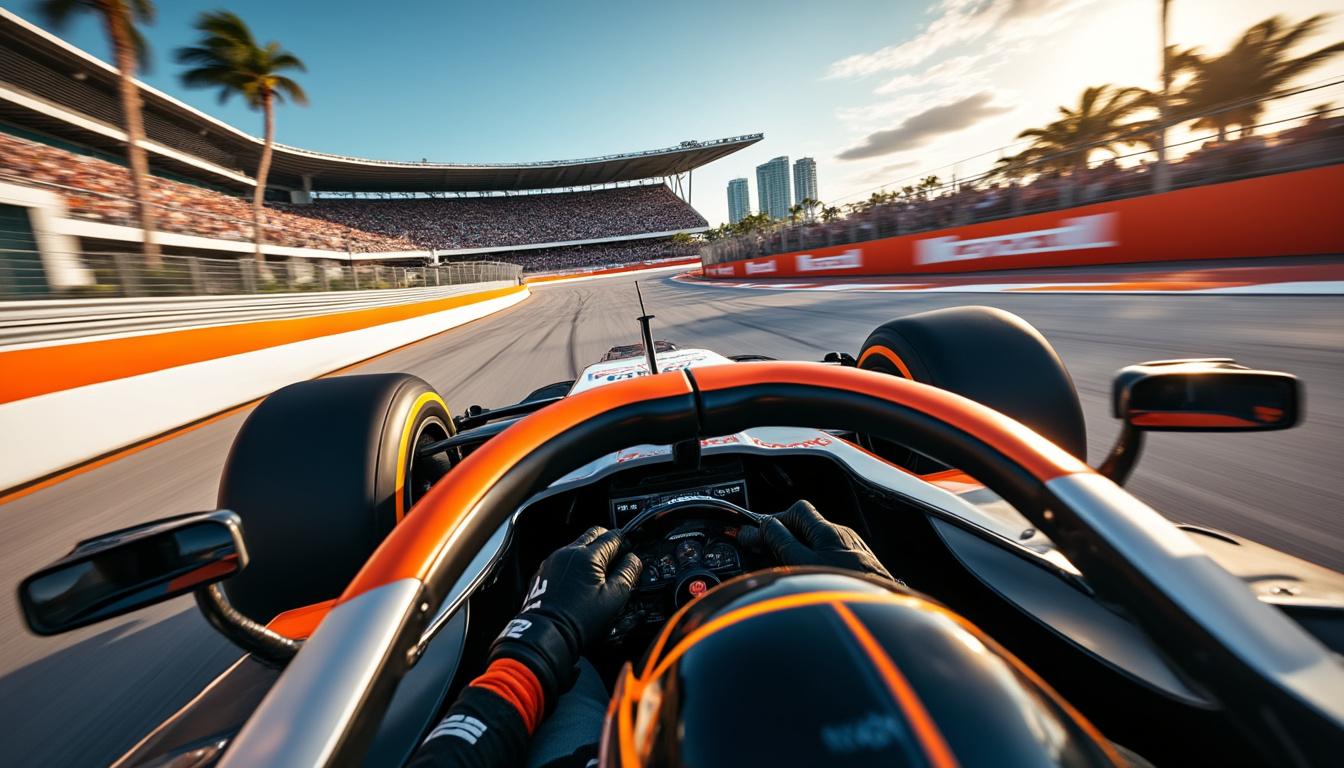
Miami 2026 Prospects: Can Ferrari Transform Lessons into a Winning Formula?
The looming Miami 2026 Grand Prix is already on every team’s radar as a crucial battleground. For Ferrari, translating the takeaways from 2025 for 2026 is not just an operational necessity but a potential turning point for their entire campaign. The transition from the underwhelming 2025 showing to competitive primacy depends on bold mechanical fixes and innovative thinking in racing strategy.
What areas must Ferrari focus on? Here is a detailed breakdown of critical focal points looking ahead:
- Technical Refinement: The SF-25’s narrow performance window due to rear instability demands urgent suspension and aerodynamic adjustments for better ride height control and balanced downforce.
- Tire Management: The Miami track’s complex layout stresses tire performance, requiring Ferrari to develop more precise strategies for tire activation and degradation handling under hot conditions.
- Race Strategy Evolution: Stronger in-race decision-making aided by advanced telemetry and simulation tools can help in making split-second calls like timely pit stops and driver swaps.
- Driver Role Optimization: Clearer communication and coordination between team engineers and drivers Hamilton and Leclerc to exploit driver strengths and create synergy.
Looking at McLaren’s 2025 performance in Miami provides both inspiration and a benchmark. Oscar Piastri’s near faultless drive combined with McLaren’s unshakable strategic execution enabled a dominant 1-2 finish, highlighting what Ferrari must aspire towards. In contrast, Ferrari’s strategy blunders undercut any chance of a similar triumph.
| Aspect | McLaren 2025 Miami | Ferrari 2025 Miami |
|---|---|---|
| Car Performance | Strong rear grip, consistent pace | Rear instability, narrow setup window |
| Tire Management | Effective activation, minimal degradation | Overheating tires, poor degradation control |
| Race Strategy | Proactive pit stops, timely driver swaps | Hesitations, delayed positional changes |
| Driver Execution | Flawless mistakes-free racing by Piastri | Somewhat inconsistent, impacted by team calls |
Success in Formula 1, especially in venues like Miami, often hinges on mastering these interdependent variables. Ferrari has the resources — both human and technical — but must leverage them cohesively to be competitive in Miami 2026.
Formula 1’s Evolving Landscape: Strategic Complexity Behind Every Grand Prix
Formula 1 in 2025 is not merely about speed—it’s a chess match played at breakneck pace, requiring supreme mastery of racing strategy. Miami’s Grand Prix exemplifies this reality by combining a technically demanding circuit with a frenetic atmosphere. For Ferrari and other teams, the challenge is decoding this complexity and converting it into on-track success.
Key strategic dimensions impacting race outcomes include:
- Virtual Safety Car (VSC) Utilization: VSC periods alter pit stop costs drastically, as seen in Miami where Ferrari had a prime chance to capitalize but didn’t fully exploit it.
- Track Position Battles: With overtaking tough on certain Miami sections, timing driver swaps and pitting becomes a game of preserve or attack.
- Driver Interplay & Team Orders: Managing teammates’ race pace and positioning to optimize overall team points instead of individual glory.
- Aerodynamic Pack Racing & Dirty Air: Cars suffer from underperformance when trailing too close to another, complicating tire wear and race tempo management.
For example, Lewis Hamilton’s telemetry revealed how following in Leclerc’s dirty air caused premature tire wear, a subtle but crucial detail that Ferrari failed to address swiftly. Such nuances demonstrate why one second in F1 can mean the difference between podium glory and a mid-pack finish.
Improving race day calls means embracing real-time data analytics, advanced driver communications, and flexible strategic models. Teams that adapt faster often change the course of championship battles.
| Strategic Factor | Impact on Race Outcome | Ferrari 2025 Miami Example |
|---|---|---|
| VSC Pit Stop Timing | Reduced pit time loss by nearly 50% | Delayed reaction, suboptimal timing |
| Driver Swap Efficiency | Maintains or improves position, controls race pace | Late swap cost potential catch-up on rivals |
| Tire Management in Pack Racing | Prevents accelerated degradation | Poor tire wear due to dirty air following |
| Communication Clarity | Optimizes driver performance and strategy execution | Frustration evident in Hamilton team radio |
Rising from the Ashes: How Ferrari Must Evolve for Miami 2026
After a less than inspiring 2025 in Miami, Ferrari’s path forward requires embracing innovation and learning from every setback. The team stands at a crossroads where technical development, driver dynamics, and strategic agility must intertwine seamlessly.
Steps Ferrari can take to pivot towards a stronger Miami 2026 campaign include:
- Investing Heavily in Aerodynamic Research: Refining the SF-25’s bodywork for greater downforce stability, crucial for varying Miami track sections.
- Enhancing Simulation Tools: Using telemetry and AI-driven predictive modeling to simulate race scenarios and optimize pit stop timing.
- Strengthening In-Race Communication Channels: Ensuring drivers and engineers exchange real-time data crisply, reducing missteps like late driver swaps.
- Fostering Driver Focus and Consistency: Encouraging Hamilton and Leclerc to synchronize their racing styles in ways that benefit overall team performance.
- Preparing for Regulatory Changes: Anticipating shifts in technical rules, especially engine and aerodynamic regulations for 2026, to avoid last-minute compromises.
These actions, combined with an introspective approach to failures, could restore Ferrari’s competitive edge. Their passion and pedigree in Formula 1 are undeniable, but the team must translate this heritage into measurable performance gains on the track.
| Improvement Area | Expected Benefit | Impact on Miami 2026 |
|---|---|---|
| Aerodynamic Refinements | Improved cornering speeds and rear stability | Better lap times, more aggressive racing lines |
| Simulation & Data Analytics Enhancement | Sharper strategic decisions and race preparedness | Optimized pit stops and tire use |
| Communication Upgrades | Reduced on-track confusion and errors | Smoother team orders and driver swaps |
| Driver Synchronization | Maximize team points and reduce intra-team conflicts | Improved race consistency |
| Regulatory Preparedness | Avoid technical setbacks due to rule changes | Sustained performance through rule transition |
Midfield Battleground and the Wider F1 Context Shaping Ferrari’s Future Prospects
Ferrari’s struggles don’t occur in isolation. The 2025 Miami GP highlighted how unpredictable and competitive the midfield has become. Teams like McLaren and Williams have shown formidable form, pressuring Ferrari’s quest for supremacy.
This evolving landscape raises vital questions for Ferrari’s future:
- How can Ferrari regain the edge in car development amid strong midfield rivals?
- What role will driver development and team cohesion play in future successes?
- Will adaptations to the next season’s technical regulations favor Ferrari’s design philosophy or present new hurdles?
Adding to the complexity, Ferrari faces off against dominant teams like Red Bull, whose tactical mastery and driver prowess continue to set high benchmarks. Lewis Hamilton’s telemetry underscored Ferrari’s current inability to consistently match such front-runners pace-wise. Without substantive changes, Miami 2026 could see the Italian team resigned to midfield battles rather than podium contentions.
Yet motorsport is never static. Injuries, unexpected weather, rule changes, and breakthrough innovations can all transform the narrative swiftly. Ferrari’s rich history of comebacks injects hope and expectation into every Grand Prix weekend.
Staying ahead requires a strategic blend of technical investment, clever race strategy, and unshakable confidence from both drivers and engineers. Miami 2026 will unmistakably be a litmus test for Ferrari’s ability to forge these elements into a winning package within the merciless theatre of Formula 1.
What were the key technical issues Ferrari faced in Miami 2025?
Ferrari struggled with rear instability, oversteer, and a narrow setup window, leading to difficulties in traction and tire management.
How did Ferrari’s race strategy hinder their performance?
Delayed driver swaps and missed opportunities during virtual safety car phases led to lost time and diminished chances to catch competitors.
What lessons from 2025 could improve Ferrari’s Miami 2026 campaign?
Improvements in aerodynamic balance, better tire management, sharper real-time race decisions, and enhanced communication could all boost performance.
Why was McLaren’s performance in Miami 2025 so dominant?
McLaren combined strong car performance, flawless driver execution by Oscar Piastri, and excellent strategic calls to secure a 1-2 finish.
Can Ferrari realistically challenge for the championship in 2026?
If Ferrari effectively addresses technical flaws and enhances their race strategy, they have the resources and talent to challenge, but competition will be fierce.
Join today and grab up to $200 bonus for your next bets!
Content assisted by AI. This article was created in whole or in part with the help of artificial intelligence.